01/2018: Space Engineering (M. Salter)

Place and Time: Abingdon, Thursday 18 Jan 2018 from 19:00 for 19:30

Barn Room, Crown and Thistle (18 Bridge St, Abingdon OX14 3HS)

TITLE: Space – The Ultimate Engineering Challenge

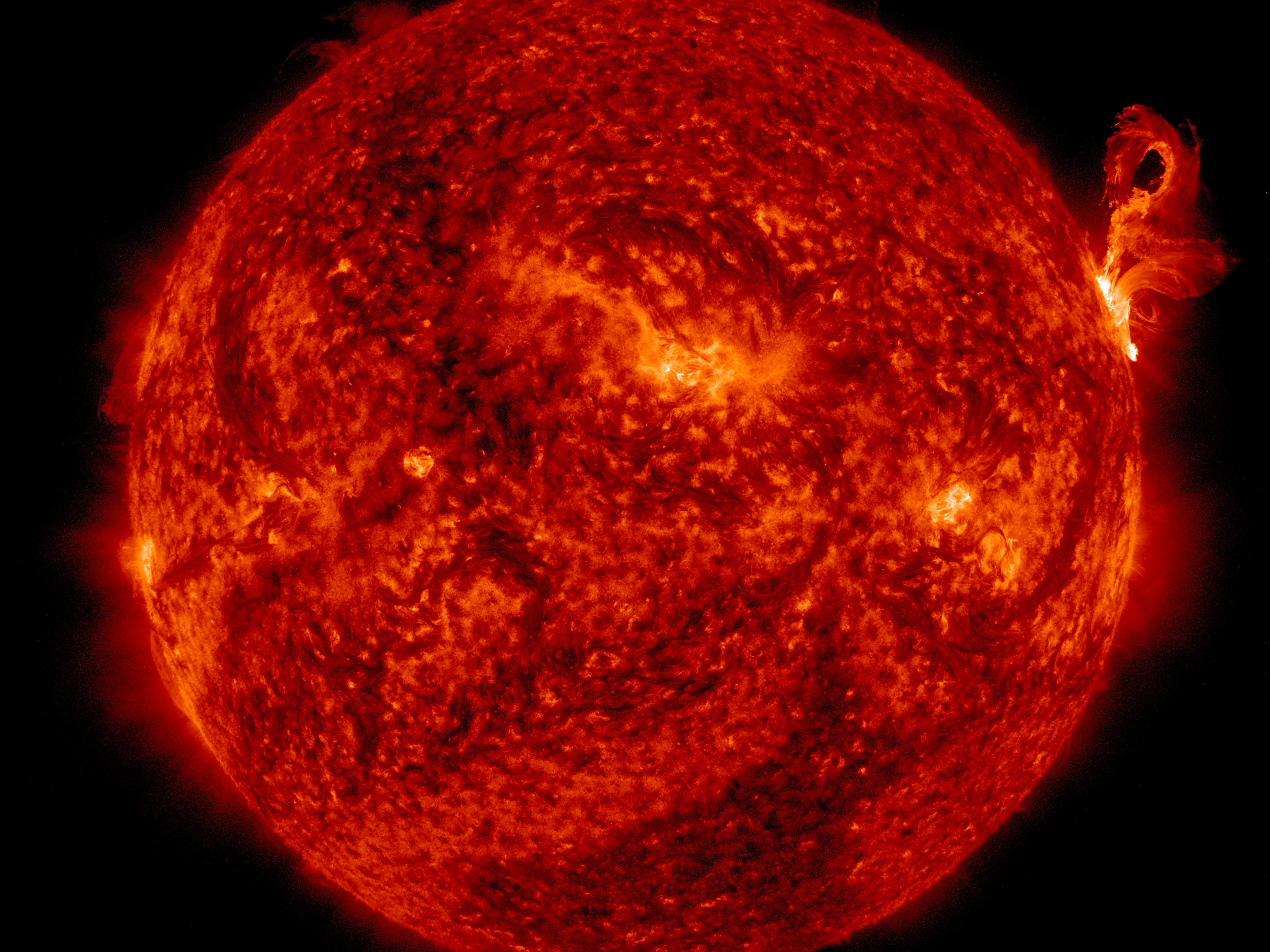
Scientists have learnt a huge amount about the universe using scientific instruments on spacecraft – from constant observation of the Sun with satellites such as the Solar Dynamics Observatory, to pioneering journeys to distant objects like Comet 67P with Rosetta and the Philae lander.  But getting to these places is only part of the challenge.  Doing cutting-edge science in the harsh environment of space – millions of miles away from Earth with no human intervention – is no small task.  The talk gives an insight into some of the technologies that help us discover our universe, and the engineering challenges that must be overcome to make it happen.

Speaker:

Mike Salter graduated from the University of Bristol and has spent the last 6 years working as an electronic design engineer at the Rutherford Appleton Laboratory for STFC RAL Space.  Working alongside leading scientists and engineers, Mike has been responsible for the design and qualification of electronics for a range of spacecraft instrumentation including a low-noise UV spectrometer for the World Space Observatory and a visible-light camera currently installed on the International Space Station.  Most recently, Mike is now working to turn a novel method of gravitational sensing suitable for space flight, based on ultra-cold atom interferometry.

11/2017: AGM and Talk: Growing New Blood Vessels (K.H. Ang)

Place and Time: Abingdon, Thursday 16 Nov 2017  from 19:00 for 19:30

Barn Room, Crown and Thistle (18 Bridge St, Abingdon OX14 3HS)

Annual General Meeting

We will hold our AGM on this day. The agenda will be announced soon. This will be followed by a short talk.

TITLE: Flipping the Switch

Understanding Angiogenesis in order to treat diseases

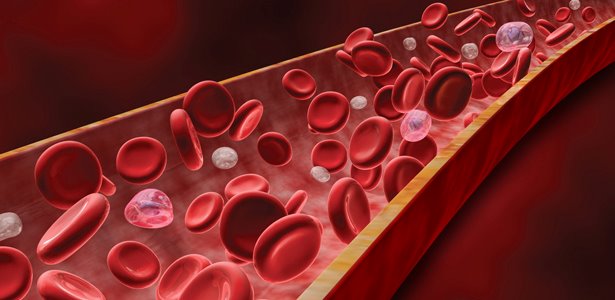
Blood circulation is of paramount importance.  A healthy and intact vascular system is needed to ensure the proper functioning of cells, tissues and organs.  One of the key concepts in vascular biology is angiogenesis, which is the growth of new blood vessels from pre-existing ones.  This process is tightly controlled by the balance of pro-angiogenic (switch on) and anti-angiogenic (switch off) factors in the system.  When this balance is disrupted, diseases can arise, such as cancer (where there is an oversupply of blood vessels) or diabetic foot ulcers (where there is an inadequate supply of blood vessels to support wound repairs).  Therefore, an understanding of this pathophysiological process is particularly crucial as it will allow us to manipulate this angiogenic switch as a form of medical intervention, by which means it is hoped we will be able to treat these diseases in the future.

Speaker: Koon Hwee Ang

Koon Hwee Ang is originally from Singapore. He graduated from an double degree program in Biomedical Sciences and Traditional Chinese Medicine, which is a joint program between Nanyang Technological University (Singapore) and Beijing University of Chinese Medicine (China). During his internship in China, he became interested in the study of blood vessels and was later given the government-administered scholarship to pursue a DPhil in Medical Oncology at the University of Oxford, studying blood vessels in tumors.  He is currently in his third year.

10/2017: Volcanoes and Global Change (T. Mather)

Place and Time: Abingdon, Thursday 19 Oct 2017  from 19:00 for 19:30

Barn Room, Crown and Thistle (18 Bridge St, Abingdon OX14 3HS)

TITLE: Volcanoes and Global Change

Since the 1990s there have been significant advances in our understanding of the ways in which volcanism interacts with Earth’s surface environment. This talk will explore some of these advances and explore the ways in which volcanism might have lead to long-term global change during geological history.

Speaker: Tamsin Mather

Tamsin Mather is a professor of Earth Science at the University of Oxford. Her main research interests center on the science behind volcanoes and volcanic behavior. My motivation is to understand volcanoes as (a) natural hazards, (b) a key planetary scale process throughout geological time, vital for maintaining habitability and (c) natural resources (e.g., geothermal power and the development of ore deposits).

09/2017: Galaxies and Dark Matter (P. Hatfield)

Place and Time: Abingdon, Thursday 21 Sep 2017 from 19:00 for 19:30

Barn Room, Crown and Thistle (18 Bridge St, Abingdon OX14 3HS)

TITLE: Are you afraid of the dark? The Interplay of Galaxies and Dark Matter

Galaxies are huge clusters of hundreds of billions of stars – the Milky Way is our galaxy, itself just one of many billions more. But even these are diminutive compared with the sea in which they swim, dark matter, an unknown substance we cannot see with our telescopes because it doesn’t give off light.

Nonetheless, astronomers have developed several techniques to indirectly study dark matter. In this talk I will describe how powerful telescopes in Hawaii, Chile and South Africa help us look back in time over the history of the Universe to see how the creation and development of galaxies is linked to dark matter, hopefully helping us learn more about the galaxies we see today and potentially even something about the mysterious nature of dark matter itself.

I will discuss the current research being done in Oxford using the VISTA telescope in Chile, as well as what the future holds for cosmology and galaxy evolution, in particular the Square Kilometre Array, a radio telescope being built in South Africa, and the planned Euclid space telescope – each of which will observe billions of galaxies from the current day back to the beginning of time.

Speaker: Peter Hatfield

Peter is a postdoctoral researcher in the Physics Department at the University of Oxford working on problems in high energy density physics and astrophysics, working with Professor Steven Rose.

He completed his D.Phil. at Lincoln College, University of Oxford earlier this year working with Professor Matt Jarvis. Before this he completed a BA in Mathematics and a MSci in Astrophysics at Pembroke College, University of Cambridge. He has also spent time working on research projects in California and South Africa.

He is also Chair of the Student Advisory Board for the Institute for Research in Schools, a new UK-wide charitable foundation that supports secondary school students doing real scientific research.