Place and Time: Abingdon, February 25, 2015 from 19:00 for 19:30
Barn Room, Crown and Thistle (18 Bridge St, Abingdon OX14 3HS)
TITLE: The Third Mode of Life – The Magic of Slime Molds
Networks are ubiquitous in modern society ranging from road, rail and utilities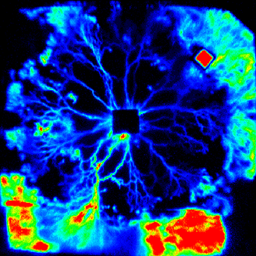 infrastructure to the internet, World Wide Web and social media. What makes a network useful is more challenging to define – typically there is benefit in rapid and efficient transfer of material or information across the network, but the network also needs to be resilient to damage or faults without substantially increasing the costs. We are studying biological organisms that grow as interconnected networks to try to infer how implementation of growth rules at a local scale can lead to emergence of robust and efficient adaptive networks on a large scale. Surprisingly, simple slime molds and fungal networks are capable of building networks with comparable properties to real-world infrastructure networks, but in the absence of any centralized control.
Speaker: Prof Mark Fricker
I started as an undergraduate reading Botany at Pembroke in 1981, followed by a PhD in Stirling on stomatal physiology with Colin Willmer in 1984, a post-doc in Edinburgh with Tony Trewavas on calcium signalling, before returning to Pembroke as a Fellow of Pembroke in 1989. I am currently an active researcher in the Plant Sciences Department.
TITLE: All the colours of the rainbow – Medieval and modern accounts of human colour perception
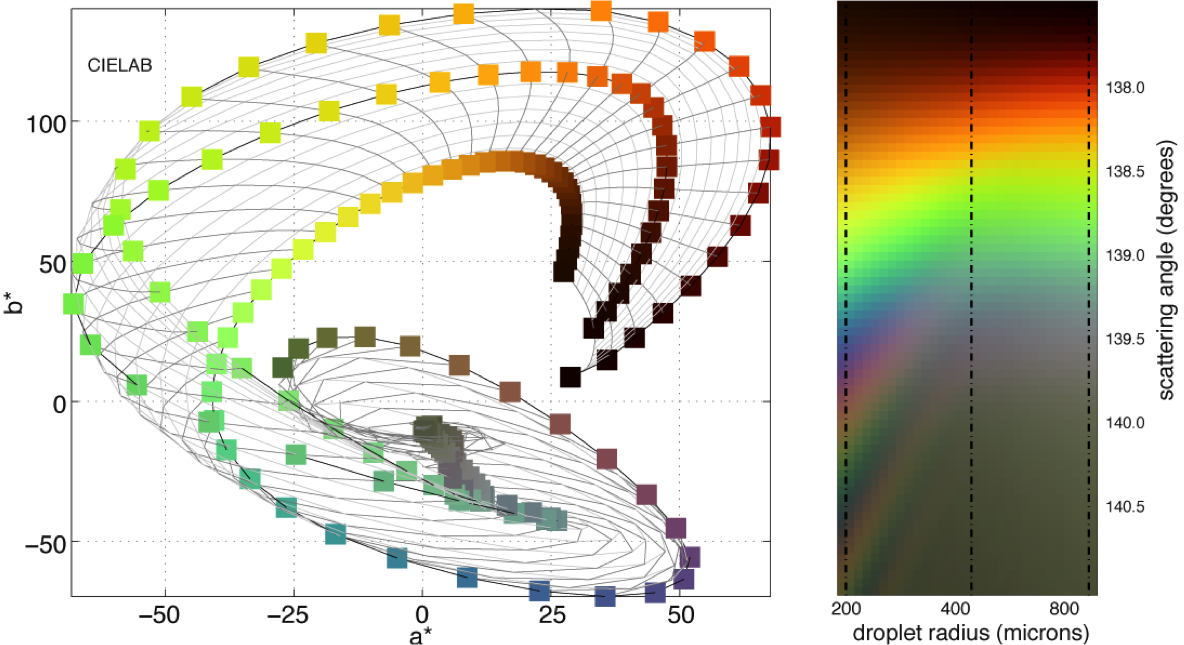
The De colore – Robert Grosseteste’s treatise on colour written c. 1225 – is a dense text of few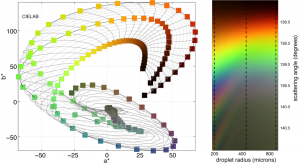 er than 400 words that presents an abstract account of the perceptual variation in colour, linked to specific properties of light and matter. It introduces new terminology in a way that assumes very tight definitions but that permits no straightforward translation or interpretation. We present an analysis of Grosseteste’s account of colour that draws upon his later treatise – the De iride – on the rainbow, which explicitly links the terminology of the De colore to properties of natural rainbows. A deeper understanding of the 13th century terminology is revealed by considering the physical constraints on colour production in rainbows, and the biological and psychological constraints on human colour perception – areas of science that are still active areas of discovery today.
Speaker: Prof Hannah Smithson
My research focuses on the neural mechanisms that underlie perception. I am fascinated by how the eye and brain process visual information. My research addresses this question primarily through psychophysical experiments – inferring the perceptual processes that underlay particular patterns of human performance on tasks with carefully selected visual stimuli.
I am particularly interested in the perception of colour. How are the signals from the three classes of cone photoreceptors processed to give rise to our perceptions of hue, saturation and brightness? What are the neural circuits of comparison and combination that permit the efficient transmission of colour information from retina to cortex? How does our perception of colour depend on our ability to identify objects and light sources in the visual scene? I am also interested in the way in which our visual systems process rapid sequences of visual events – a sequence of changes in illumination, a sequence of images from successive fixations, or the complex trajectory of a moving object.